
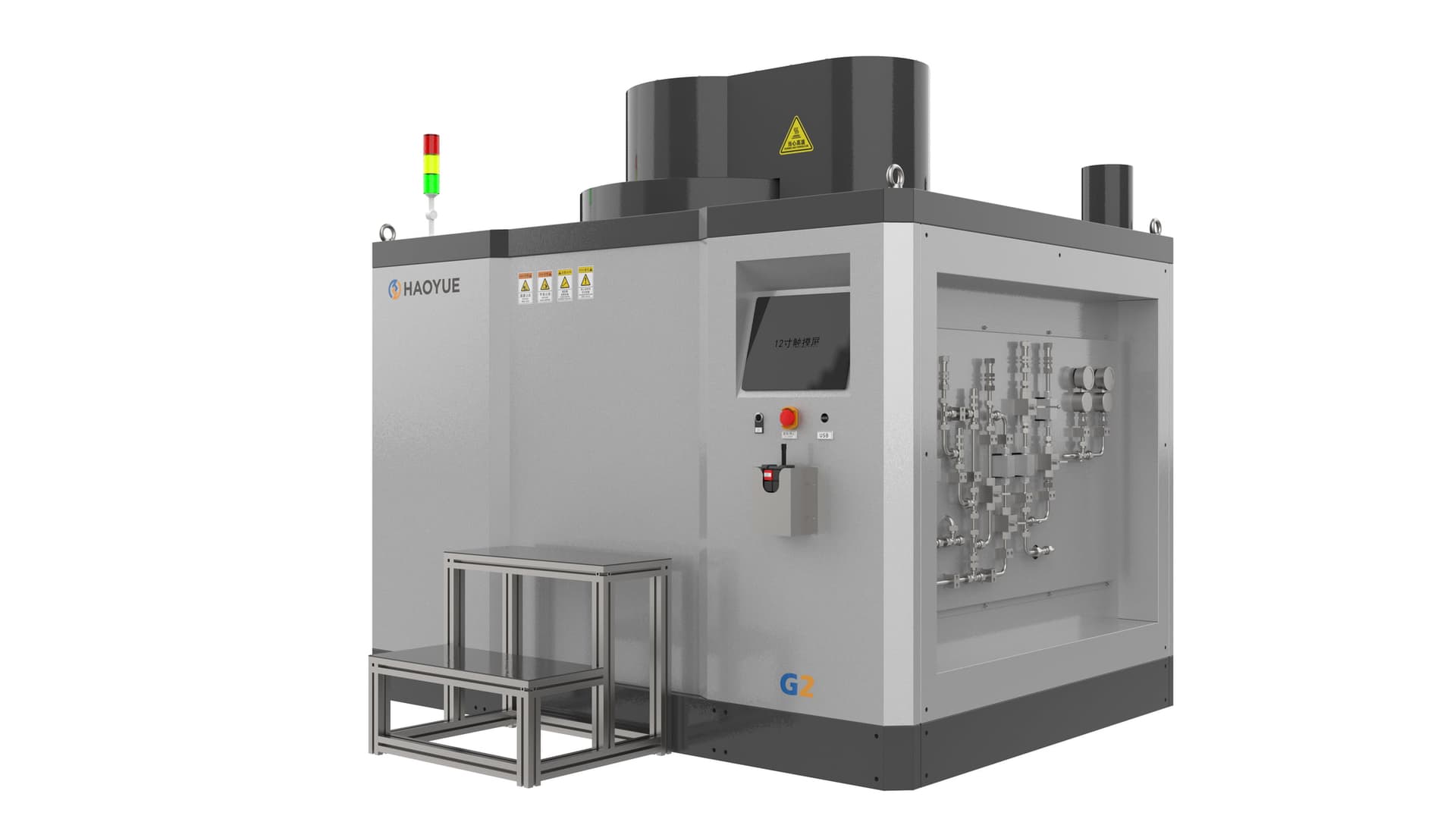
Gas Pressure
G2 Pressure Sintering Furnace
Vertical integrated pressure sintering furnace for advanced ceramic materials.
Integrates positive pressure dewaxing, vacuum dewaxing, vacuum sintering, partial pressure sintering, pressure sintering, atmosphere control, and cooling for high-pressure nitrogen or argon sintering.
Key Features
Technical Highlights
Highly integrated vertical top-opening structure improves loading accuracy, operation efficiency, and space utilization.
Automated furnace lid lifting and horizontal rotation support one-button opening and closing for safer operation.
Thermal-field simulation, modular heating elements, and efficient insulation help improve temperature uniformity and energy efficiency.
High-precision atmosphere pressure control automatically inflates or exhausts to maintain the required furnace pressure.
Data acquisition stores and retrieves key process parameters including voltage, current, temperature, pressure, and vacuum degree.
HMI, PLC, PID, and pressure sensing control provide real-time process monitoring and multi-level interlocking protection.
Rapid heating and cooling with efficient insulation can reduce electricity and gas consumption by more than 30%.
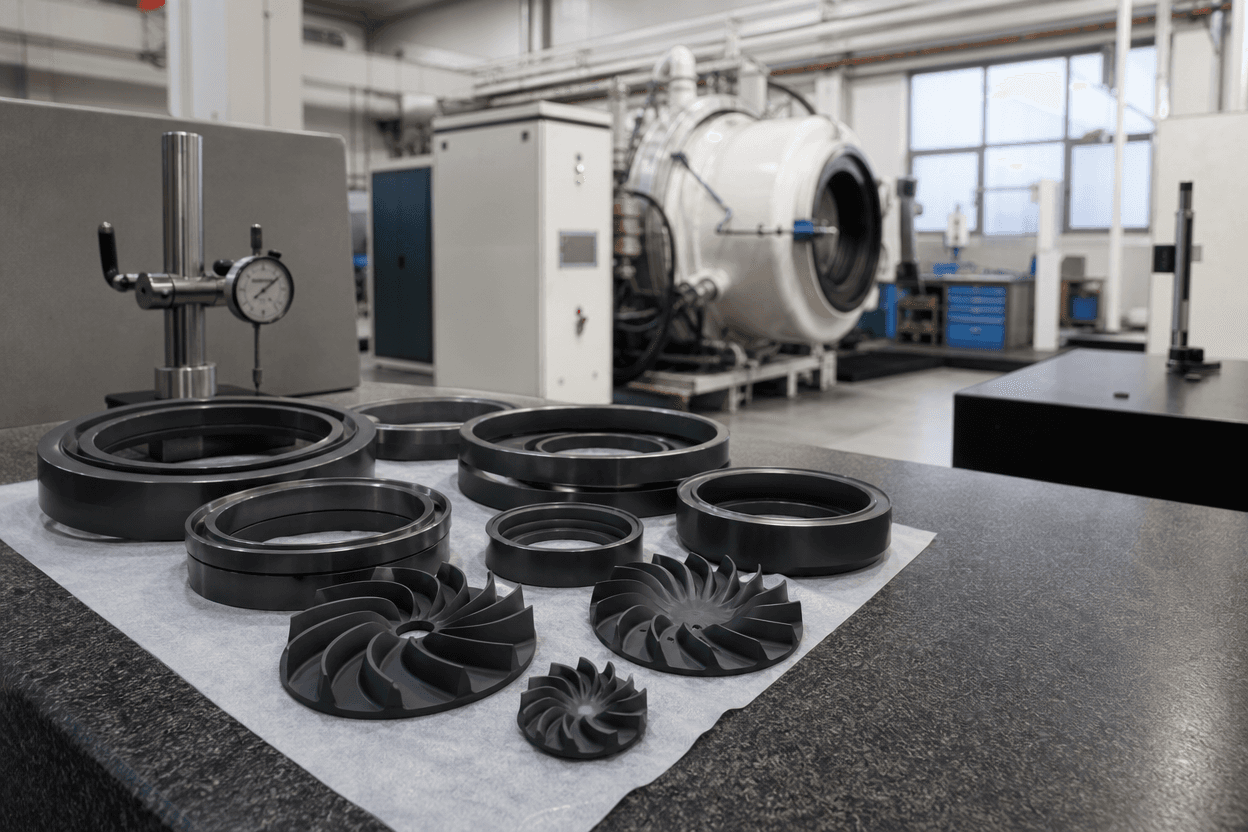
Suitable for high-pressure nitrogen or argon sintering of silicon nitride ceramic balls, ceramic cutting tools, and related materials.
Process Flow
Gas Pressure Process Overview
Gas pressure sintering follows vacuum or partial-pressure sintering with a high-pressure inert gas stage that closes residual porosity.
Technical selection guide
Plan the process before comparing G2 Pressure Sintering Furnace options.
Review ceramic composition, pressure-temperature window, gas handling, loading, and safety requirements before comparing models.
Delivery and installation support
Define the handover scope before the purchase order.
Prepare operating records, inspection inputs, planned downtime, and technical questions for a service review.
Proposal reviews can include factory testing, utility and site interfaces, delivery documents, installation, operator training, spare parts, and commissioning responsibilities.
Selection guide
Confirm the process window before quotation.
For faster engineering review, prepare the core process boundaries before sending an inquiry.
Can the chamber be customized?
Yes. Chamber size, heating zone, fixture, pressure, and atmosphere configuration should be confirmed through technical review.
Is a process test recommended?
For new materials or demanding density targets, a sample process discussion helps reduce equipment selection risk.
What should be sent with an inquiry?
Material, target temperature, pressure or load, atmosphere, workpiece size, and expected capacity are the most useful inputs.
Typical Applications And Materials
These are common review areas. Final suitability depends on the material, geometry, process window, tooling, and acceptance criteria supplied with the inquiry.
Application examples
See how the process is framed before model selection.
The examples are anonymized application reviews. They show the inputs to confirm and do not claim customer results without an agreed test and acceptance plan.
Related products
Review similar furnace options.
SPS
Spark Plasma Sintering System
Designed for rapid sintering of ceramics, composites, metals, and functional materials under controlled pressure and atmosphere.
Hot Pressing
Vacuum Hot Pressing Furnace
Combines heating, vacuum, and mechanical pressure for high density materials and demanding thermal processes.
Gas Pressure
Gas Pressure Sintering Furnace
Supports pressure atmosphere sintering for materials that require controlled gas pressure and stable thermal processing.
Gallery And Media
Review product images, equipment details, and available media before sending a technical inquiry.
Technical Downloads
Use these documents to prepare a technical proposal request with material, atmosphere, temperature, pressure, and chamber details.
Gas Pressure Sintering Questionnaire
Requirement checklist for ceramic sintering projects, including gas type, pressure range, temperature, and safety configuration.