
Hydrogen atmosphere processing
H Series Vacuum Hydrogen Furnaces
Use the H Series for reduction sintering of compatible ceramics, cemented carbides and composites under hydrogen or vacuum, as well as metal heat treatment and precious-metal degassing. Select the chamber, hot zone, vacuum and gas system around the material and batch.
Laboratory and production configurations
Select a model to review its hydrogen processing features and discuss the chamber, hot zone, vacuum and atmosphere configuration for your material.
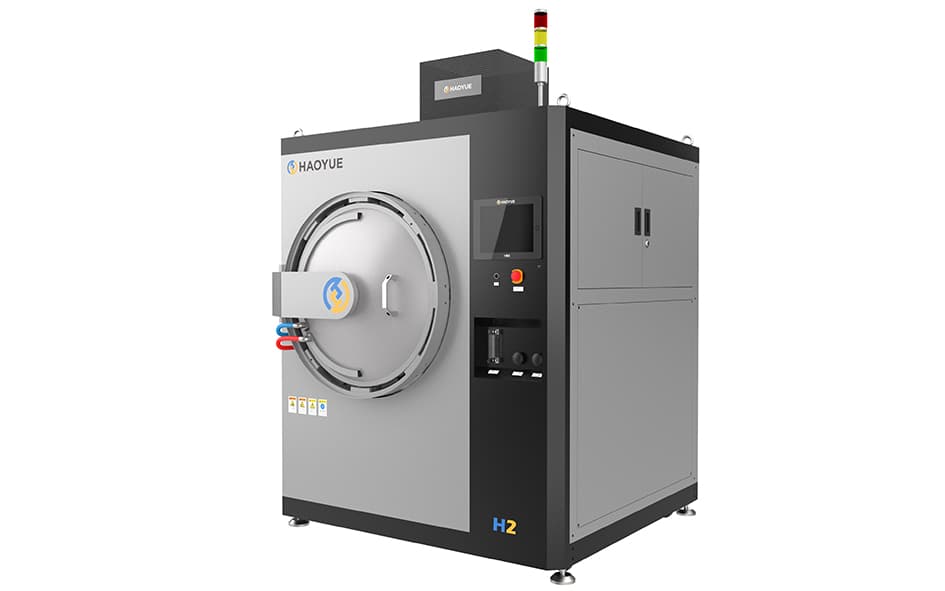
H Series Laboratory Vacuum Hydrogen Furnace
Laboratory hydrogen furnaces: H2MO14 up to 1400 °C and H2W20 up to 2000 °C, both with a 200 × 200 × 300 mm work zone for reduction sintering and heat treatment.

H Series Vacuum Hydrogen Furnace
Industrial hydrogen furnaces with six catalog models, 1000 / 1300 °C maximum-temperature entries and model-specific work zones for reduction sintering and heat treatment.
Process capabilities
- Hydrogen or vacuum processing
- Molybdenum-strip or tungsten-mesh heating by model
- Laboratory to production configurations
- Published standard model specifications
Inputs for equipment selection
Share material composition, part or powder geometry, batch weight, work-zone dimensions, temperature cycle, vacuum target, hydrogen purity and flow requirements. Gas supply, purge, exhaust treatment, cooling and interlocks are reviewed with the site requirements before configuration is confirmed.
Hydrogen furnace questions
What is the H Series designed for?
The H Series supports reduction sintering of compatible ceramics, cemented carbides and composites in hydrogen or vacuum, as well as metal heat treatment and degassing. The material and atmosphere must be reviewed together.
How do I choose a laboratory or production configuration?
Provide the material, batch size, workpiece dimensions, temperature cycle, required vacuum and gas purity, utilities, and intended throughput. Haoyue reviews these inputs before confirming the chamber, hot zone and gas system.
What needs to be reviewed for hydrogen service?
Hydrogen supply, inert-gas purging, gas monitoring, exhaust treatment, cooling, interlocks and applicable site requirements must be reviewed as part of the equipment configuration and installation plan.