
What information is needed for diffusion welding equipment?
Send material pair, bonding area, target temperature, vacuum level, pressure requirement, fixture concept, and flatness or inspection requirements.
Advanced Vacuum Sintering Equipment
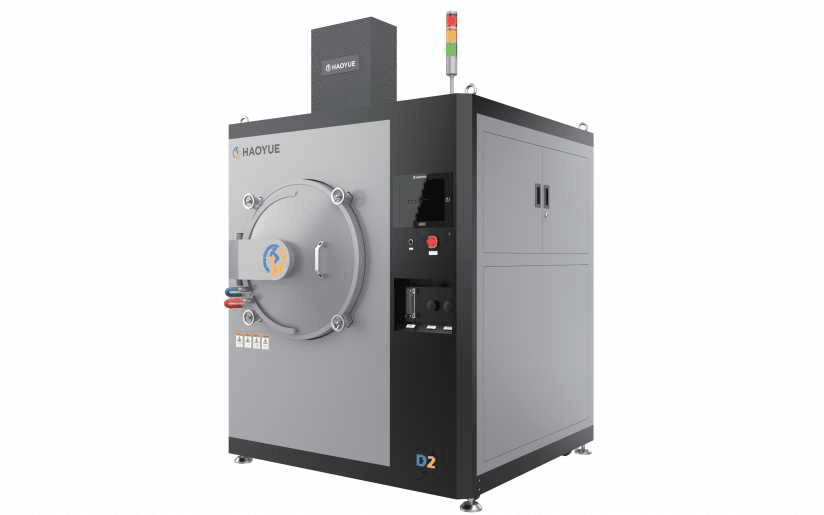
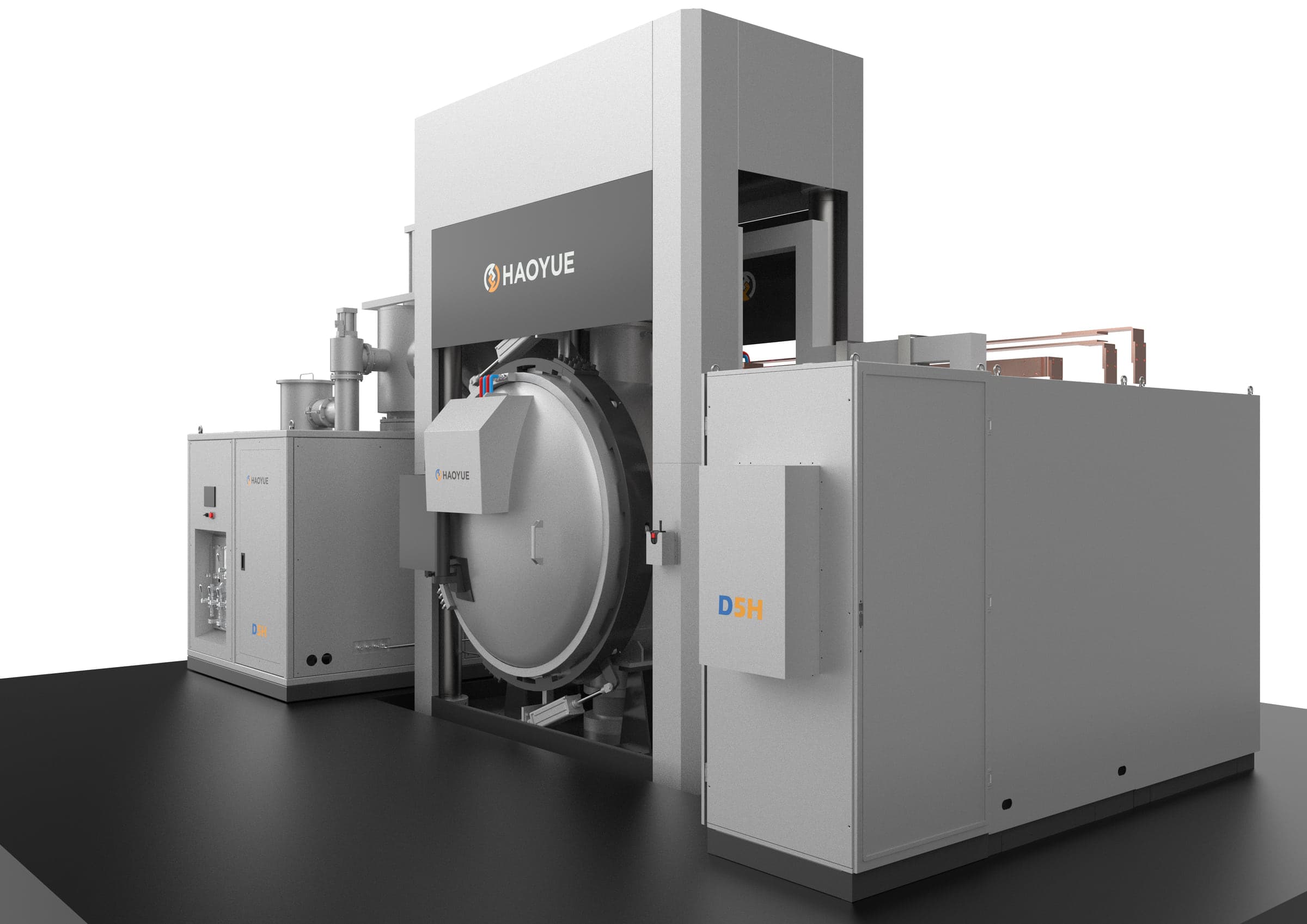
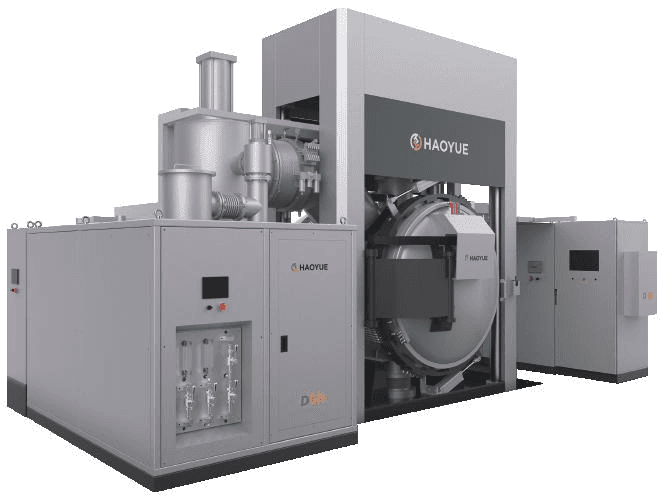
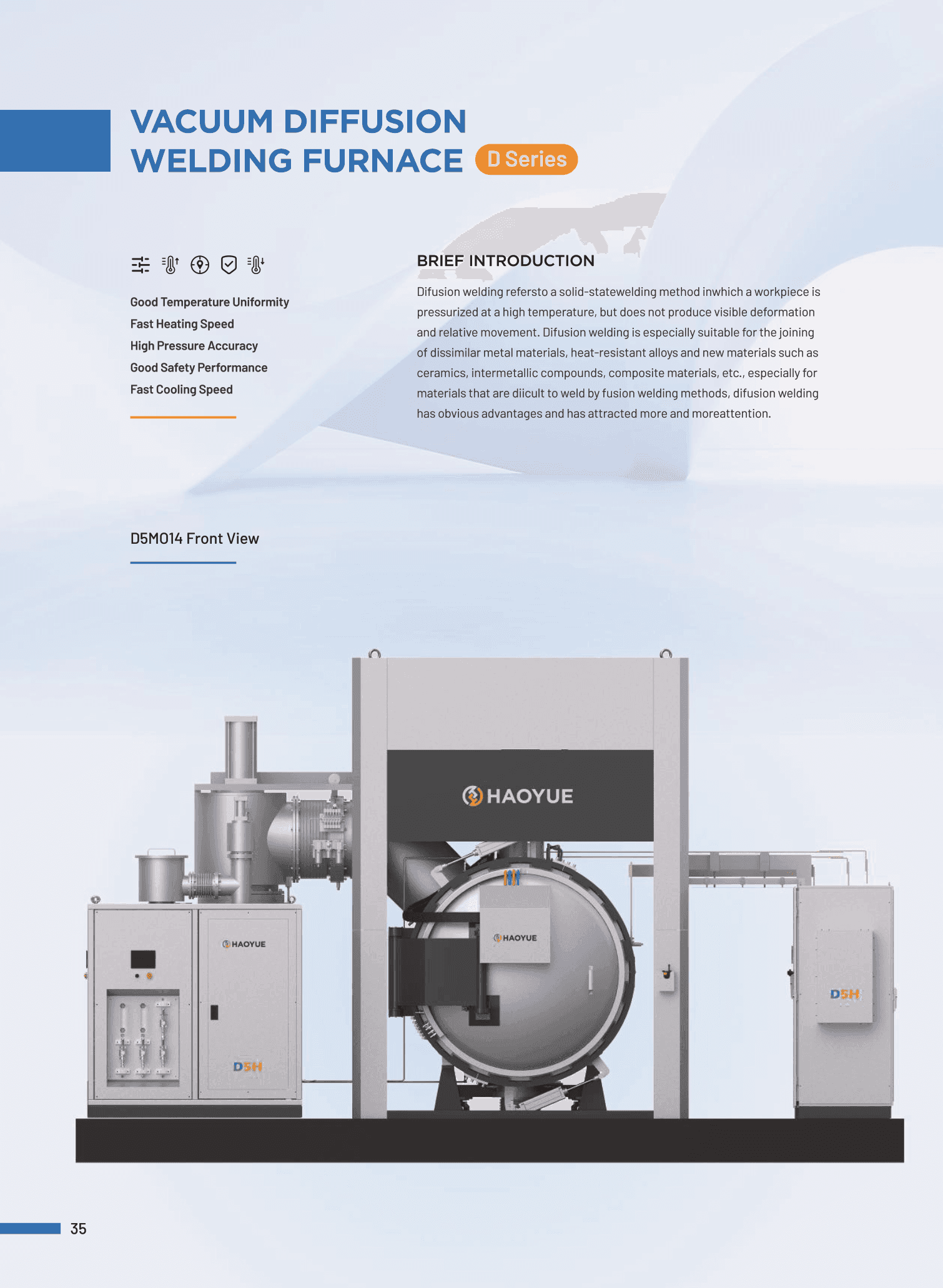
Diffusion welding
Use the D Series when layered parts, heat exchangers, precision assemblies, or special alloys require controlled bonding under vacuum and pressure.
Vacuum bonding
Precision pressure control
Large-area joining
Clean thermal process
Typical materials
Application fields
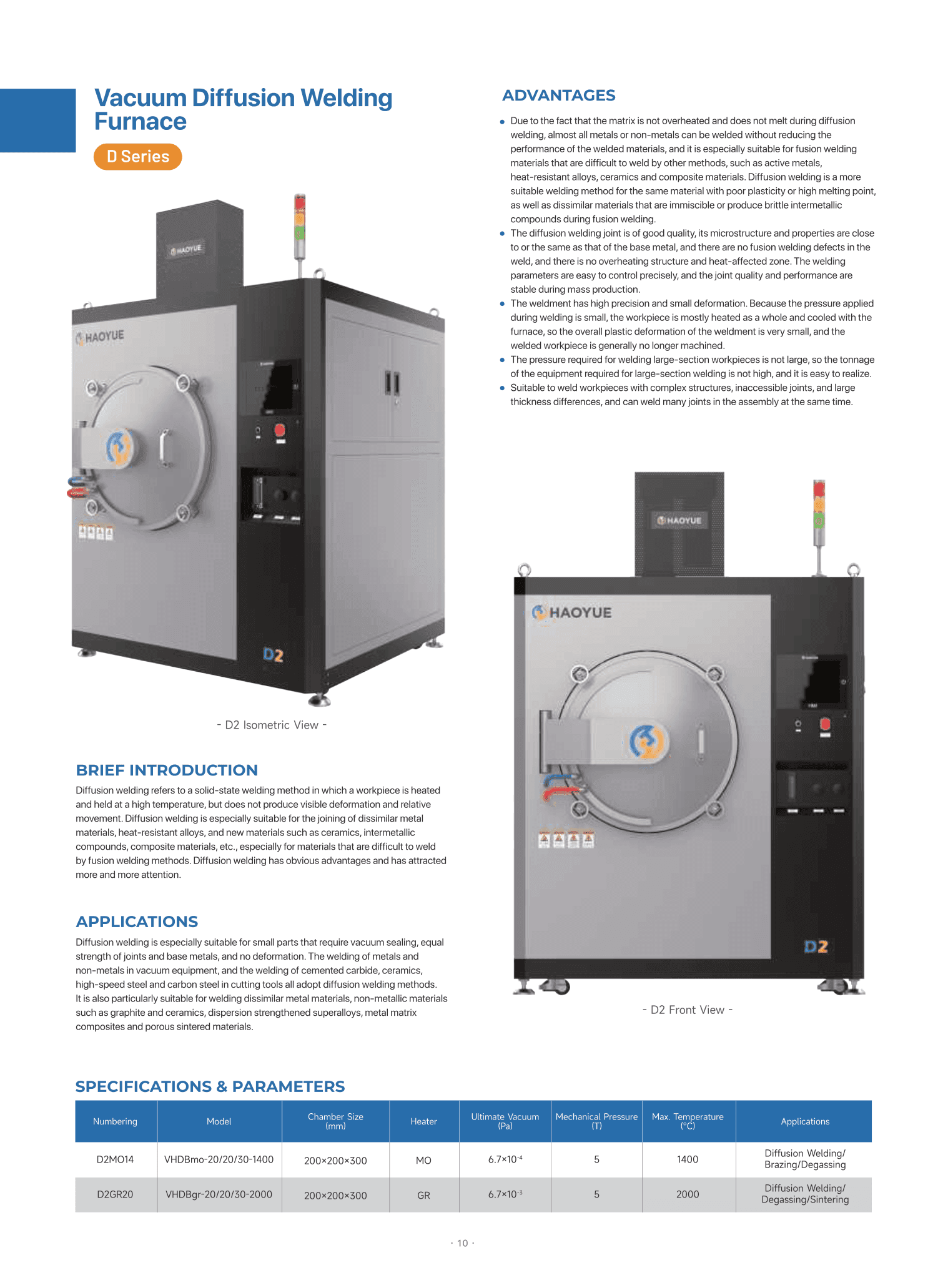
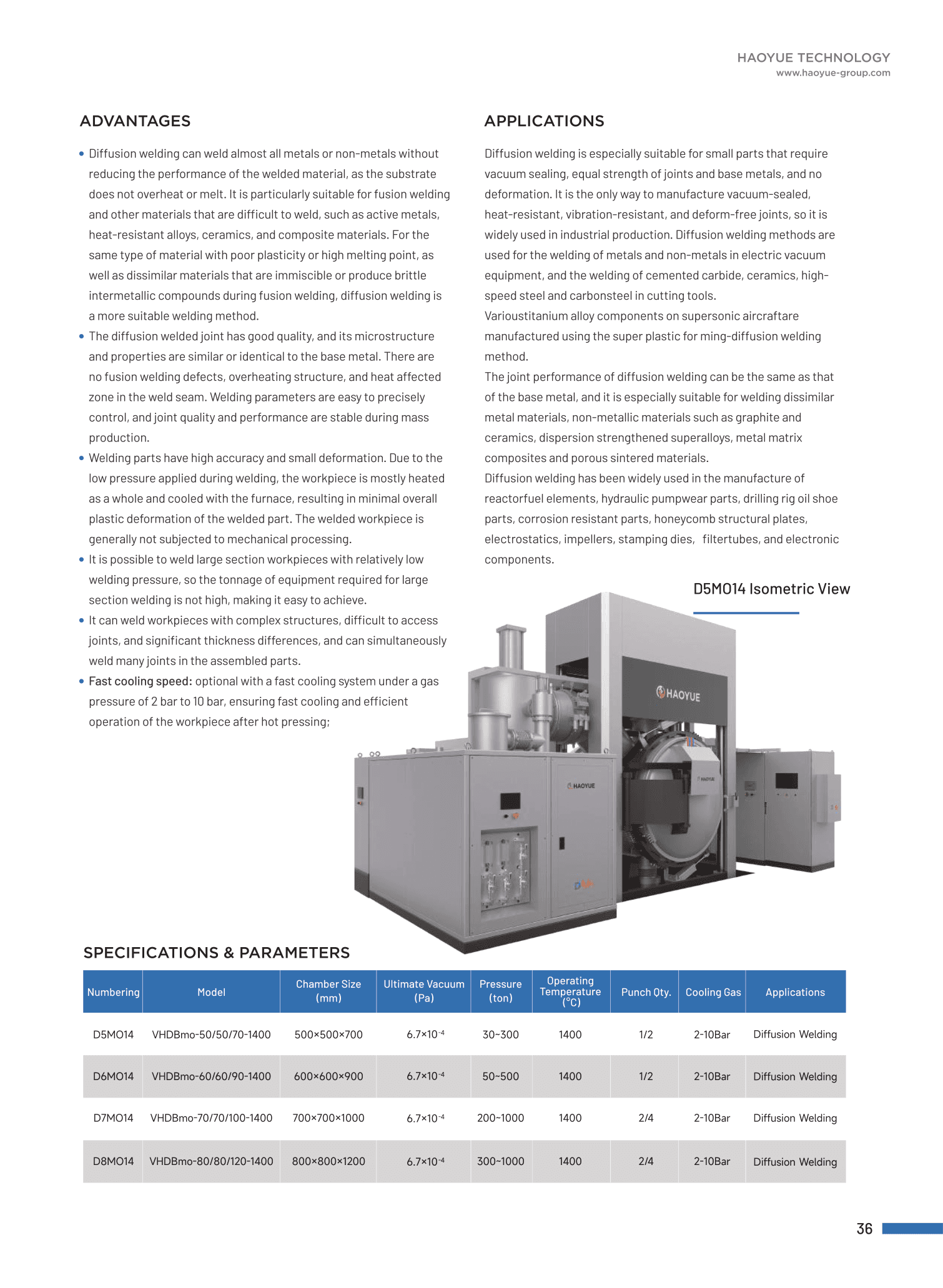
| Model | Temperature | Pressure / Load | Atmosphere | Scale | Best For |
|---|---|---|---|---|---|
| D2 | Project matched | Lab bonding load | Vacuum | Lab / pilot | Process trials and small assemblies |
| D4 | Project matched | Industrial bonding load | Vacuum | Pilot / production | Precision industrial assemblies |
| D5 | Project matched | Large bonding load | Vacuum | Production | Large diffusion welded parts |
Selection guide
Diffusion welding projects should define material pair, surface preparation, bonding area, pressure uniformity, temperature, vacuum level, fixture method, and part flatness requirements. The furnace and tooling must be evaluated together because pressure distribution controls bonding repeatability.
Diffusion welding is selected when solid-state bonding and interface control are required. Vacuum brazing is selected when a filler material and capillary joint design are suitable for the assembly.
Material pair
Bonding area
Required pressure
Vacuum level
Fixture method
Flatness and inspection needs
Send material pair, bonding area, target temperature, vacuum level, pressure requirement, fixture concept, and flatness or inspection requirements.
Tooling affects pressure distribution, surface contact, thermal uniformity, and final bonding repeatability across the joining area.
Typical projects include laminated structures, heat exchangers, precision assemblies, special alloys, and vacuum bonding applications.
Series buying evidence
Define the material pair and complete bonded stack before comparing press capacity, vacuum level, or chamber size.
Joint and channel drawings, surface route, bonding area, stack height, and flatness
Tooling stiffness, load distribution, alignment, temperature field, and vacuum records
Witness samples, dimensional or leak checks, and material-specific joint validation
Factory acceptance, delivery documents, installation, training, and site sign-off
Brochure pages
Engineer-led reply target within 24 hours.