
Process Guide
Vacuum Furnace Atmosphere Control Guide
Understand how vacuum, inert gas, process gas, and pressure control affect high-temperature furnace configuration and material results.
Published by Haoyue Technology | Updated
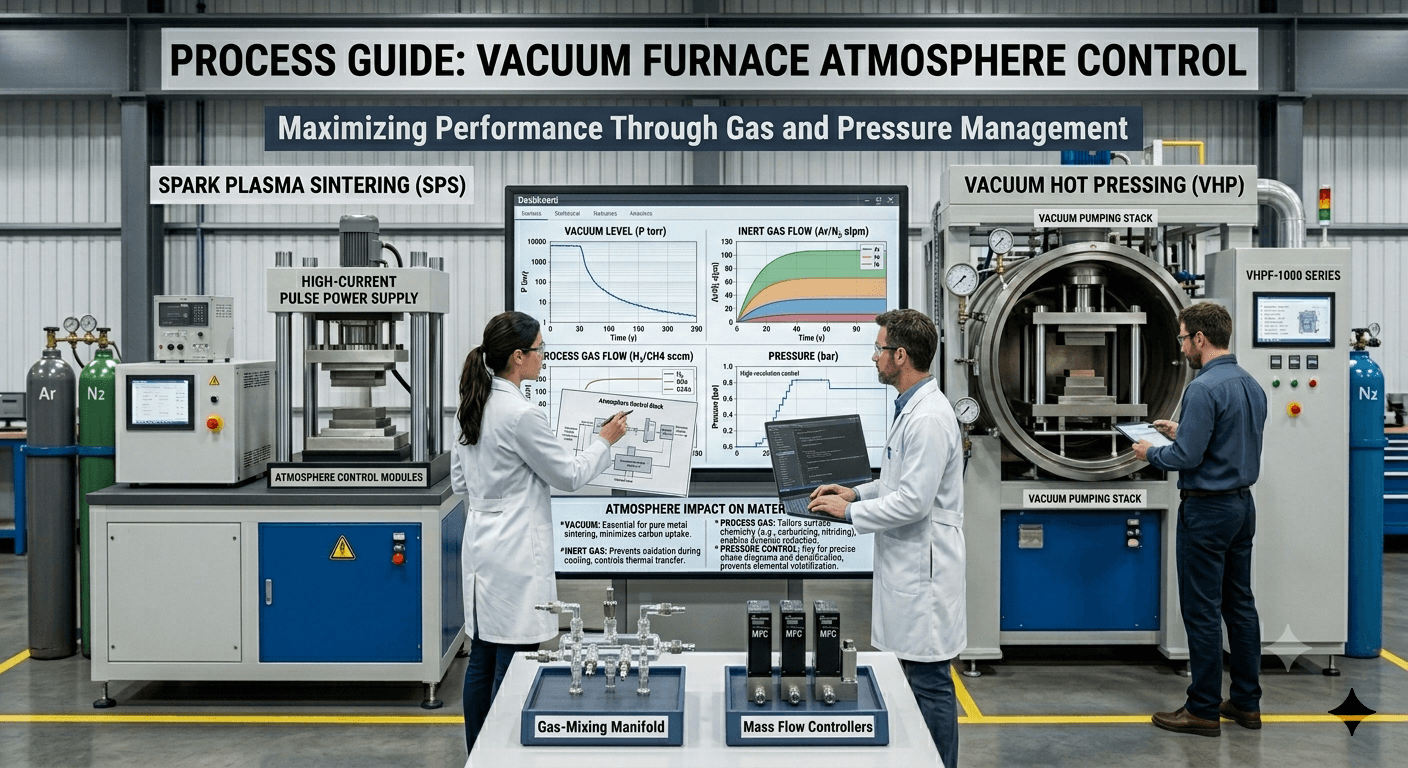
Vacuum and gas are process variables
Vacuum level, leak rate, gas purity, flow control, and pressure stability can influence oxidation, contamination, evaporation, densification, and final material repeatability.
Information to prepare
Before inquiry, prepare target vacuum, working atmosphere, gas type, maximum temperature, workpiece size, cycle time, and whether the process requires partial pressure or controlled cooling.
Review gas purity and purge logic
Gas purity, flow, purge sequence, valve response, leak rate, and pressure stability should be reviewed together. The right specification depends on material sensitivity, evaporation, oxidation risk, and the planned cooling route.
Match measurement to the workpiece
Confirm where temperature is measured, how the load is monitored, which vacuum and gas values are logged, and how the process record will be checked against the workpiece and fixture arrangement.
Define a repeatable acceptance plan
Before quotation, agree on leak checks, temperature uniformity checks, alarm and interlock tests, sample inspection, data export, and any witness-run requirements. These items make later commissioning easier to evaluate.
Related process selection hubs
Continue from this article into the buyer page that matches the furnace family, process window, and inquiry checklist.
Related equipment and proof points
Need a configuration review?
Send your material, temperature, pressure, atmosphere, and capacity requirements to Haoyue for a practical furnace recommendation.
Request Technical Proposal