
Acceptance Guide
Diffusion Bonding Inspection and Furnace Acceptance Planning
Build a diffusion bonding inspection and acceptance plan covering equipment functions, process records, tooling, dimensions, witness samples, leak testing, and joint evaluation.
Published by Haoyue Technology | Updated
Separate equipment acceptance from bonded-part qualification
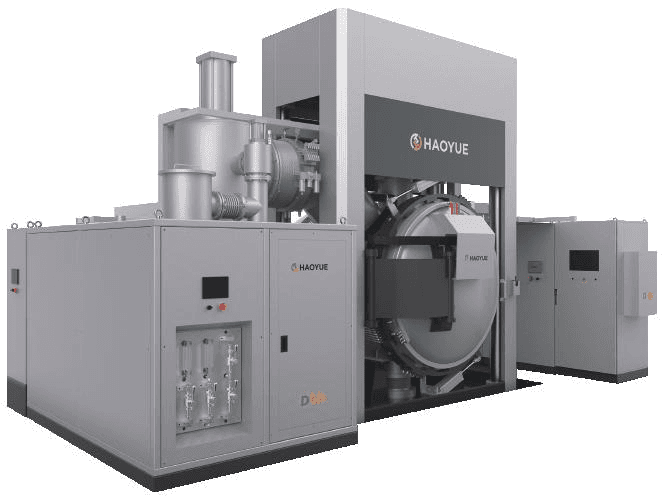
Factory and site acceptance can verify furnace functions such as temperature control, press movement, load measurement, vacuum response, gas handling, cooling, alarms, interlocks, data records, and tooling fit. Bonded-part qualification addresses whether a defined material, surface route, fixture, cycle, and inspection plan produce an acceptable joint. Keeping these scopes separate prevents a catalogue specification from being treated as a process guarantee.
Define measurable equipment checks
The purchase specification should identify the usable work zone, temperature and load ranges, sensor checks, vacuum and leak checks, ram stroke and alignment checks, control and recipe functions, alarm and interlock tests, data-export format, cooling operation, and utility boundaries. Each item needs a method, instrument or data source, responsible party, and acceptance limit agreed for the project.
Connect process records to the actual assembly
Temperature, load, displacement, vacuum, gas state, recipe steps, and cooling records should be traceable to the tooling stack and witness material used in a trial. The plan should identify sensor positions, effective bonding area, load calculation, stack drawing, fixture revision, material batch, surface preparation, and any deviation from the intended cycle. This record structure supports later engineering review without claiming that logged setpoints alone prove bond quality.
Choose inspection methods around the joint and failure risk
Possible product checks include dimensions, flatness, visual condition, leak testing, flow-path checks, metallographic sections, mechanical coupons, witness samples, or a selected nondestructive method. Suitability depends on material, geometry, channel access, defect type, sampling strategy, and the buyer's quality requirements. The furnace supplier and buyer should agree which checks are demonstrations, which are acceptance tests, and which remain part of later product qualification.
Assign samples, tooling, documentation, and retest responsibilities
Before quotation, state who provides parts, powder or plate stock, prepared surfaces, tooling, release materials, test gases, inspection services, fixtures, and consumables. Define the number of trial cycles, handling of nonconforming results, permitted adjustments, retest conditions, report language, raw-data delivery, and sign-off authority. Clear ownership reduces disputes and helps the equipment and process teams evaluate the same evidence.
Related process selection hubs
Continue from this article into the buyer page that matches the furnace family, process window, and inquiry checklist.
Related equipment and proof points
Need a configuration review?
Send your material, temperature, pressure, atmosphere, and capacity requirements to Haoyue for a practical furnace recommendation.
Request Technical Proposal