
Service Guide
Vacuum Furnace Lifecycle Maintenance Planning
Prepare a vacuum furnace maintenance discussion with equipment identification, operating records, inspection observations, critical components, spare-parts context, and planned downtime.
Published by Haoyue Technology | Updated
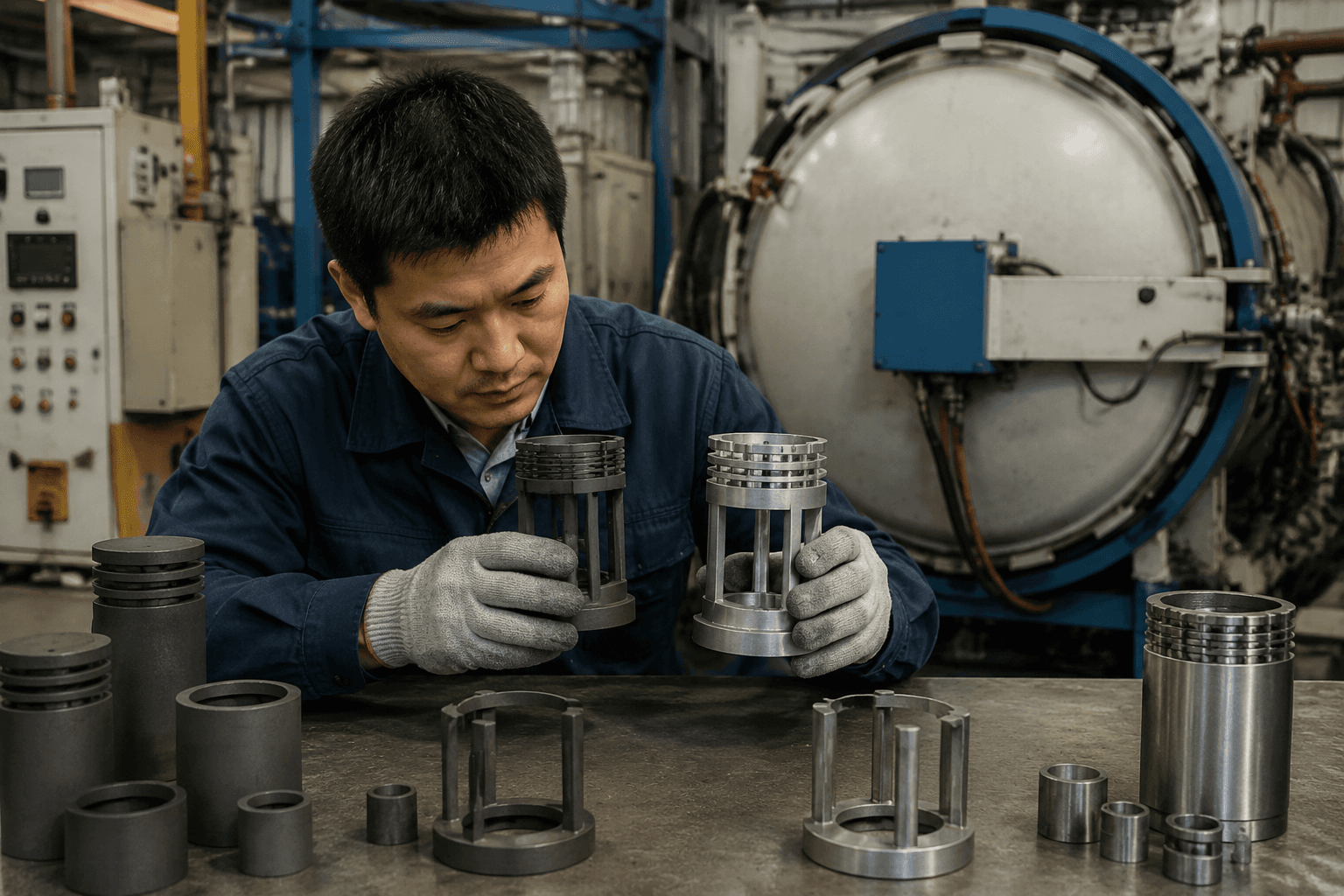
Start with the exact equipment and current operating condition
Record the equipment model, serial information when available, hot-zone configuration, pump and gas arrangement, controls, installation condition, maintenance history, and the operating sequence in which a service question occurs. This prevents a generic part name or symptom from being treated as a complete technical description.
Keep the operating records that explain the condition
Useful records can include alarm history, vacuum trend, temperature or power record, gas or pressure state, recipe stage, cooling condition, inspection notes, and photos. Note when the condition first appeared and whether the material, tooling, utilities, operating practice, or configuration changed at the same time.
Separate routine inspection from a capability change
Routine inspection focuses on the present configuration and safe operating condition. A change involving controls, hot-zone design, data requirements, throughput, cooling, atmosphere, safety functions, or process capability should be treated as a distinct retrofit or engineering review with its own scope and validation plan.
Plan critical and consumable component discussions
For heating elements, insulation, seals, sensors, fixtures, pumps, valves, and other assemblies, provide the equipment reference, part history if known, photos or drawings, process conditions, compatibility questions, planned maintenance window, and the consequence of an unexpected replacement need.
Use planned downtime to organize the work
A maintenance window should account for safe isolation, access, lifting, inspection points, replacement sequence, post-work checks, records, and the time needed to restart or confirm the agreed equipment condition. The actual schedule depends on site rules and the confirmed scope.
Document the next operating baseline
After an inspection or change, retain the agreed component references, observations, operating records, alarm status, checks performed, open items, and any revised operating or inspection instructions. This record provides a clearer baseline for future maintenance and technical communication.
Related process selection hubs
Continue from this article into the buyer page that matches the furnace family, process window, and inquiry checklist.
Related equipment and proof points
Need a configuration review?
Send your material, temperature, pressure, atmosphere, and capacity requirements to Haoyue for a practical furnace recommendation.
Request Technical Proposal